

When a time off policy is configured to prorate using workdays, the system calculates entitlement based on the employee’s working pattern (hours per day), rather than calendar days.
This means partial months are calculated proportionally using actual hours worked vs. total working hours in the period.
I will use an example of an employee terminated on April 13th, 2026.
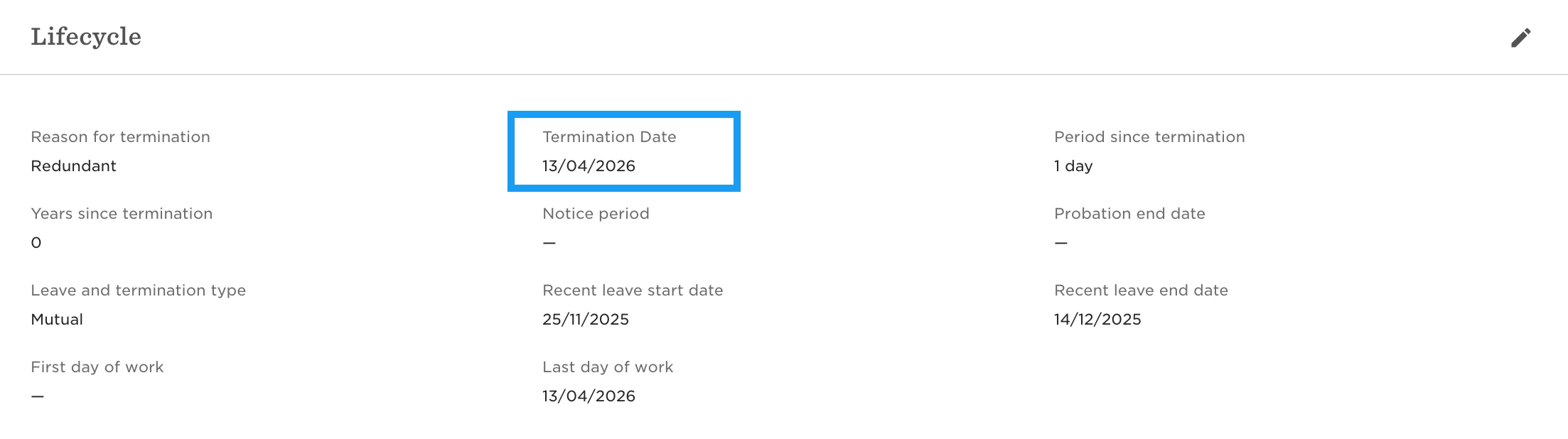
Here’s how the calculation works:
Start with the annual allowance and divide it into monthly accrual:
Example: 26 days ÷ 12 months = 2.17 days per month
For full months, the system simply adds the monthly accrual:
Example: January–March = 3 full months → 2.17 × 3 = 6.5 days
For a partial month, the system calculates based on workdays and hours according to the employee's working pattern.
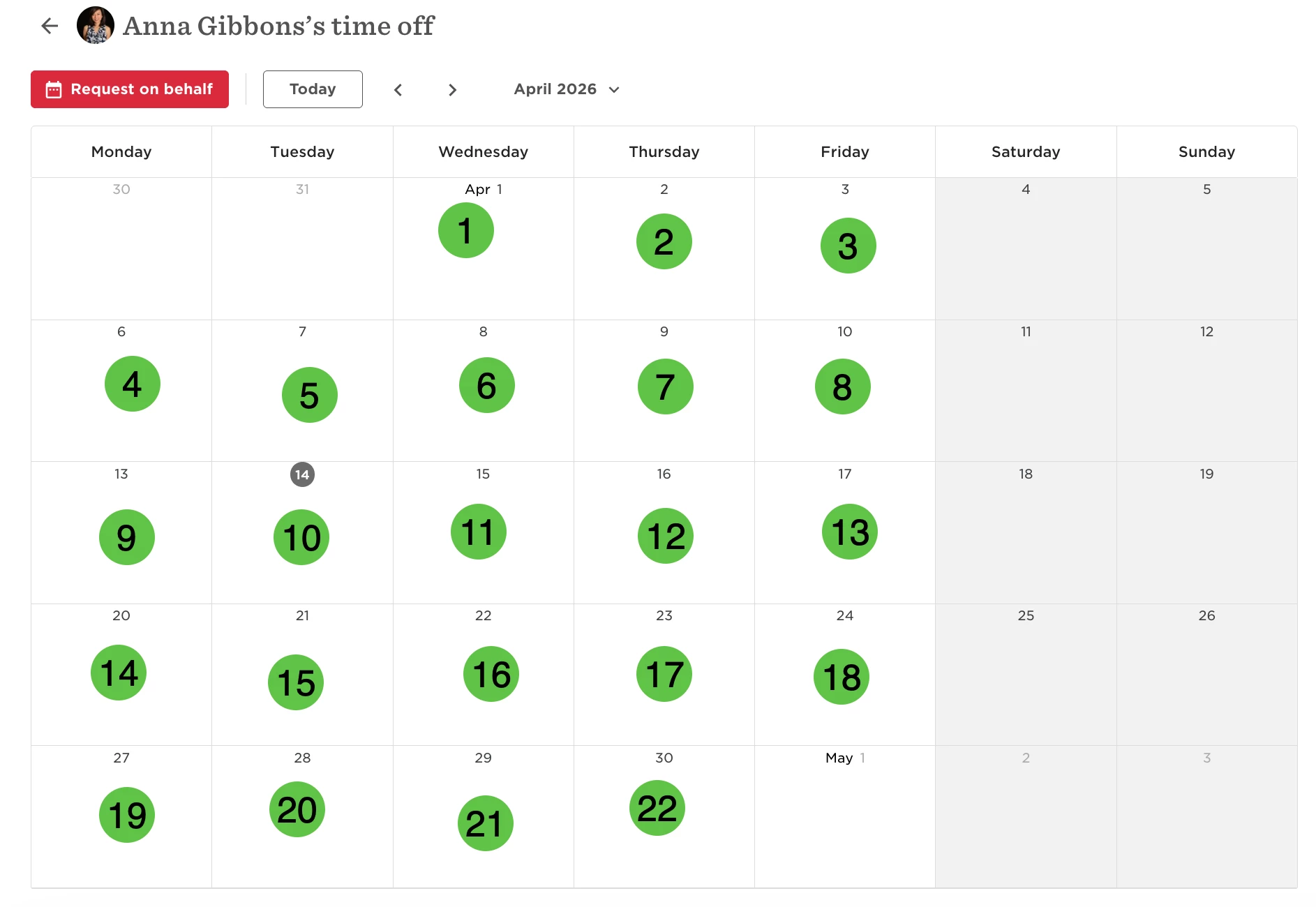
Calculate total working hours in the month (Monday-Friday 8 hours per day):
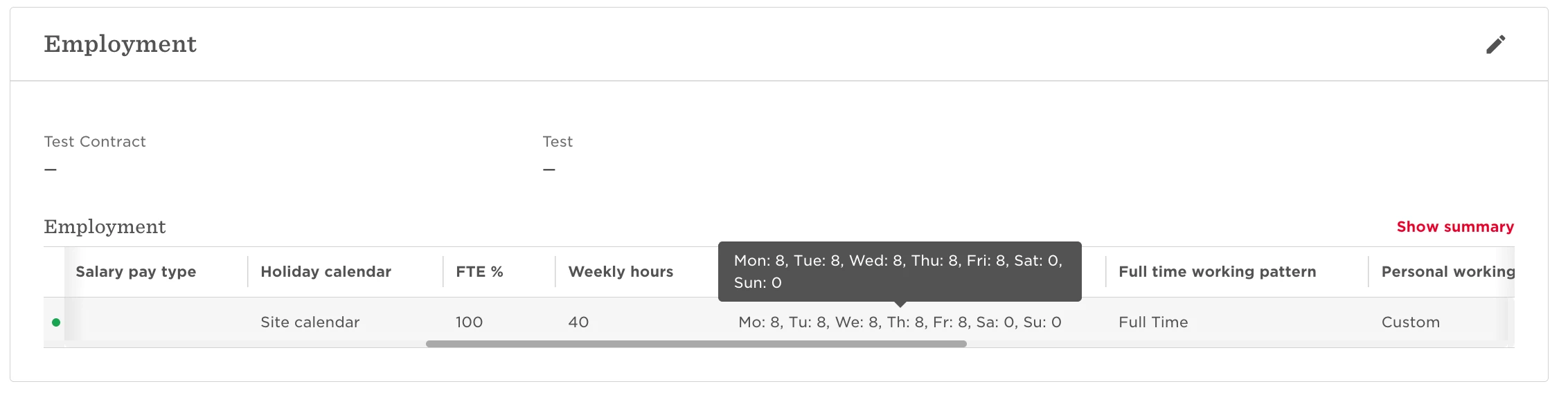
Example: 8 hours × 22 working days = 176 hours
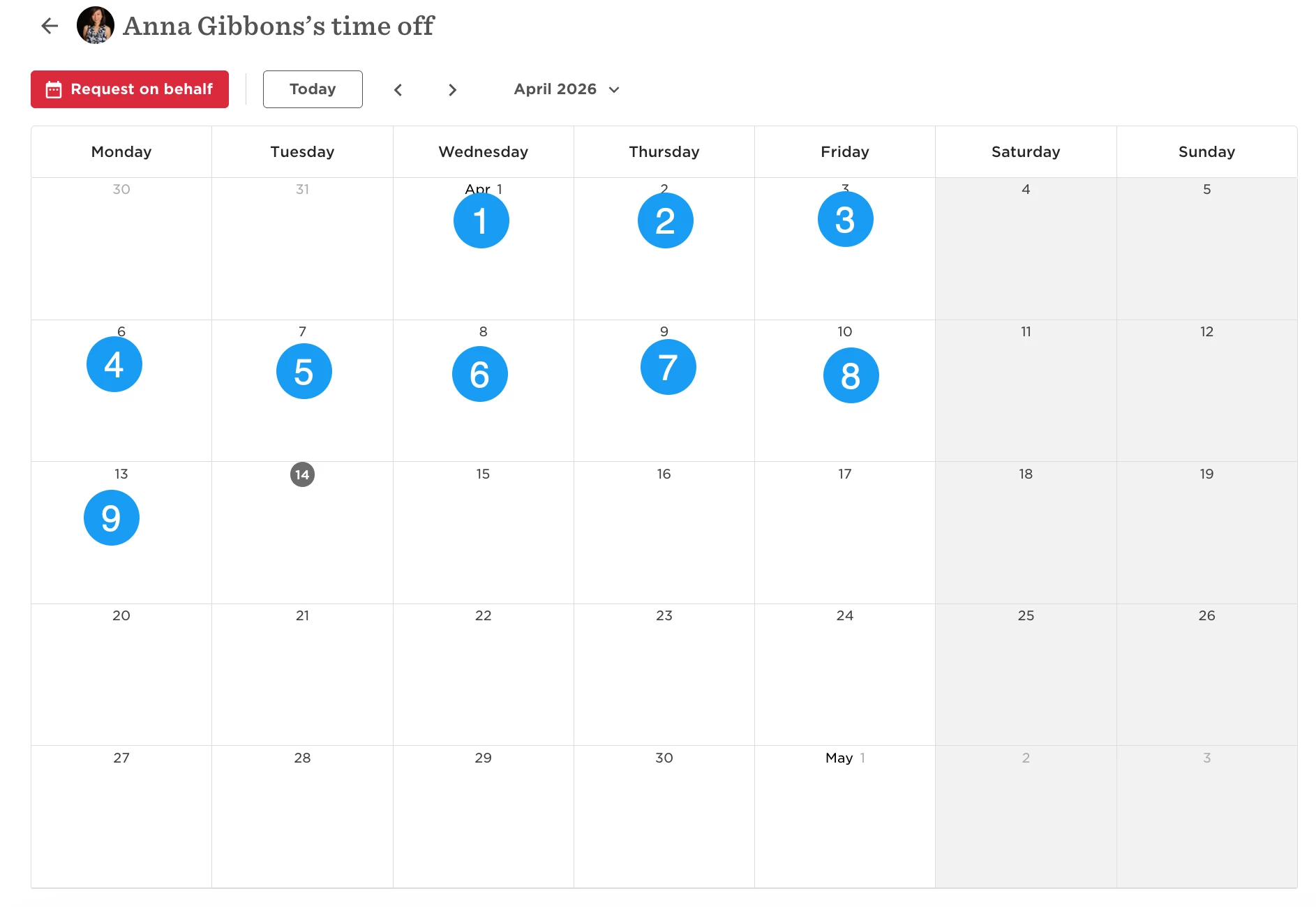
Calculate the employee’s actual worked hours
Example: 8 hours × 9 worked days = 72 hours
Convert the monthly allowance into an hourly value
2.17 ÷ 176 = 0.0129 days per hour
Multiply by actual worked hours
0.0121 × 72 = 1.032 days
Add full 3 months and partial month together:
6.5 + 0.886 = 7.386 days

A few important notes:
The calculation depends on the employee’s working pattern (e.g., 8 hours per day, Monday–Friday)
If working hours vary by day in the employee's working pattern, the system calculates each day accordingly (e.g. every Monday will be calculated as 10 hours if the working pattern has Mondays as such)
The system also takes any non-working days booked in time off into consideration, so these days need to be deducted from the total and worked hours in the partial month.