
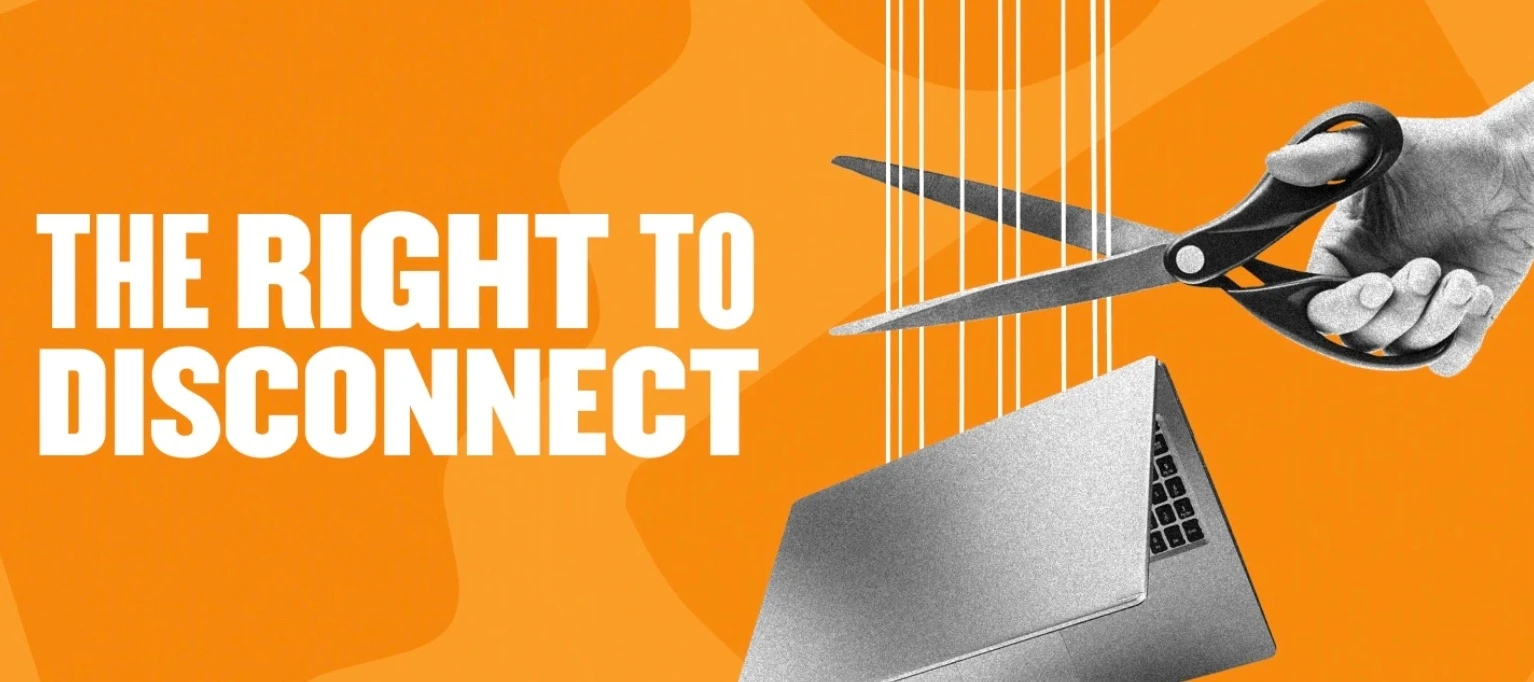


The right to disconnect: What Aussie law means for the rest of us

  • May 2, 2025 5:50 PM UTC
  • May 19, 2025 9:13 PM UTC
  • 6 replies
  • 197 views
  • Translate All
The right to disconnect: What Aussie law means for the rest of us
Harshil Boparai
Bobber

Welcome to the first edition of our new content hub. We’re starting strong with May’s theme: Culture by Design – What Modern Teams Really Need.


Let’s start with one of the biggest shifts shaping workplace culture today: setting boundaries around availability.

In a digitized world where hybrid working has blurred the boundaries between home and work, people find it harder to switch off. The expectation to be “always on” has become standard, contributing to burnout and declining mental wellbeing.

The right to disconnect aims to change that. It’s a policy that allows people to fully unplug outside working hours—recognizing the need for uninterrupted personal time to support wellbeing and productivity.

Australia is leading the way in this. In a bold move, their new 'right to disconnect' legislation, effective August 2024, empowers people to refuse to respond to work-related communications outside their regular working hours. It is a significant step in recognizing the importance of personal time, with penalties in place for employers who fail to comply.

Side note: Curious about what Australia’s new Right to Disconnect law really means in practice? Sabrina breaks it down and shares how Bob can support businesses in getting ahead of the changes.

A look at how other countries are responding:

  • United Kingdom: The UK’s new government has pledged to promote a healthier work-life balance, aiming to prevent homes from becoming 24/7 offices.

  • United States: California recently shelved its proposed right to disconnect bill, though some companies are adopting internal policies.

  • France: A pioneer in this space, France introduced right to disconnect laws in 2017 for companies with over 50 employees.

  • Germany: Companies like Volkswagen and Daimler have internal rules restricting after-hours communication.

  • Italy & Spain: Both have passed legislation to ensure employees have protected downtime in the digital age.

Zooming in: how are organisations putting this into practice?

Even in regions without legal mandates, many companies recognize the need to develop their right-to-disconnect policies to better suit today’s modern workforce. These policies are often tailored to the specific needs of the company and its people, balancing operational demands with the workforce’s wellbeing.

Do you have a formal right-to-disconnect policy, a team-level agreement, or a different approach entirely?

We’d love to hear what’s working in your workplace. Share below and it might inspire others! 

6 replies

Jasmine Hepherd
Bobber

I love that after working hours my Slack auto-pauses new messages until the following day. Eases the pressure of constantly being “online”. Would love to hear your thoughts ​@Olaf Becker, ​@PaulinaLipinska, ​@Anna Bischoff, ​@Johanna.torq, & ​@Kris Van Acker :) 

Translate

PaulinaLipinska

We have an informal approach to this and try to monitor the behaviours.

Apart from promoting digital hygiene at work (emails and auto-responders, Slack statuses and notification management, working hours displayed in calendars etc.), we also do not allow access to work apps on private devices, i.e. accessing Bob on a private mobile phone, especially when you’re on vacation. 

We monitor the usage of days off and react when there are spikes in carry overs and so on. Same with overtime, whenever a spike in accumulated hours happens - we react, we talk, we try to understand why. And come up with an idea on how to prevent it in the future.

Translate

Harshil Boparai
Bobber

We have an informal approach to this and try to monitor the behaviours.

Apart from promoting digital hygiene at work (emails and auto-responders, Slack statuses and notification management, working hours displayed in calendars etc.), we also do not allow access to work apps on private devices, i.e. accessing Bob on a private mobile phone, especially when you’re on vacation. 

We monitor the usage of days off and react when there are spikes in carry overs and so on. Same with overtime, whenever a spike in accumulated hours happens - we react, we talk, we try to understand why. And come up with an idea on how to prevent it in the future.

Thanks for sharing! 🙌 Love the proactive approach—especially not allowing access to work apps on personal devices. Curious—have you seen a cultural shift in how people use their time off since putting these measures in place?

Translate

PaulinaLipinska

It’s a very unbalanced battle, to be honest. We have a split in general.

Some regions (Germany, Poland) and departments are very good at using their PTO, consistently plan vacations and reduce the balances close to 0 at the end of the year.
With others, it’s harder. We need to push for booking the time off and consistently remind them about the expiration dates. 

I’d say, rigid deadlines helped us a lot with this.

Translate

Karen Stewart Longest

We operate in the US and UK so no official requirements but we try to be mindful of it. 

It’s a fine line and it starts from the top and the HR team as well. When I started working at my last company, the employees were really good at disconnecting. After a year or so, I noticed they were checking in on PTO and responding outside their regular hours and when I asked one said “I see you and my boss working during your time off and I feel bad that I don’t work as much.”  It was a reality slap to the face. The leaders discussed the bad example we were setting and started to be more cognizant of when we were responding.

At my new company, I’ve made an effort to not have my email on my phone, my lights automatically turn off at quitting time as a reminder to stop working, and I try not to respond to Teams messages to non-executives at unusual hours. With new hires, I try to stress the importance of disconnecting and even say I don’t have the email on my phone. The executives do a good job of also telling people to take time for themselves and encourage total disconnect during non-work hours and when on PTO. 

Translate

Jasmine Hepherd
Bobber

We operate in the US and UK so no official requirements but we try to be mindful of it. 

It’s a fine line and it starts from the top and the HR team as well. When I started working at my last company, the employees were really good at disconnecting. After a year or so, I noticed they were checking in on PTO and responding outside their regular hours and when I asked one said “I see you and my boss working during your time off and I feel bad that I don’t work as much.”  It was a reality slap to the face. The leaders discussed the bad example we were setting and started to be more cognizant of when we were responding.

At my new company, I’ve made an effort to not have my email on my phone, my lights automatically turn off at quitting time as a reminder to stop working, and I try not to respond to Teams messages to non-executives at unusual hours. With new hires, I try to stress the importance of disconnecting and even say I don’t have the email on my phone. The executives do a good job of also telling people to take time for themselves and encourage total disconnect during non-work hours and when on PTO. 


Thank you so much for sharing ​@Karen Stewart Longest, this was an insightful read. It’s counterproductive to consider that part of working effectively is making a conscious effort to take a step back and rest. How in particular have you noticed your approach to work since putting these (necessary!) boundaries in place?

Translate