
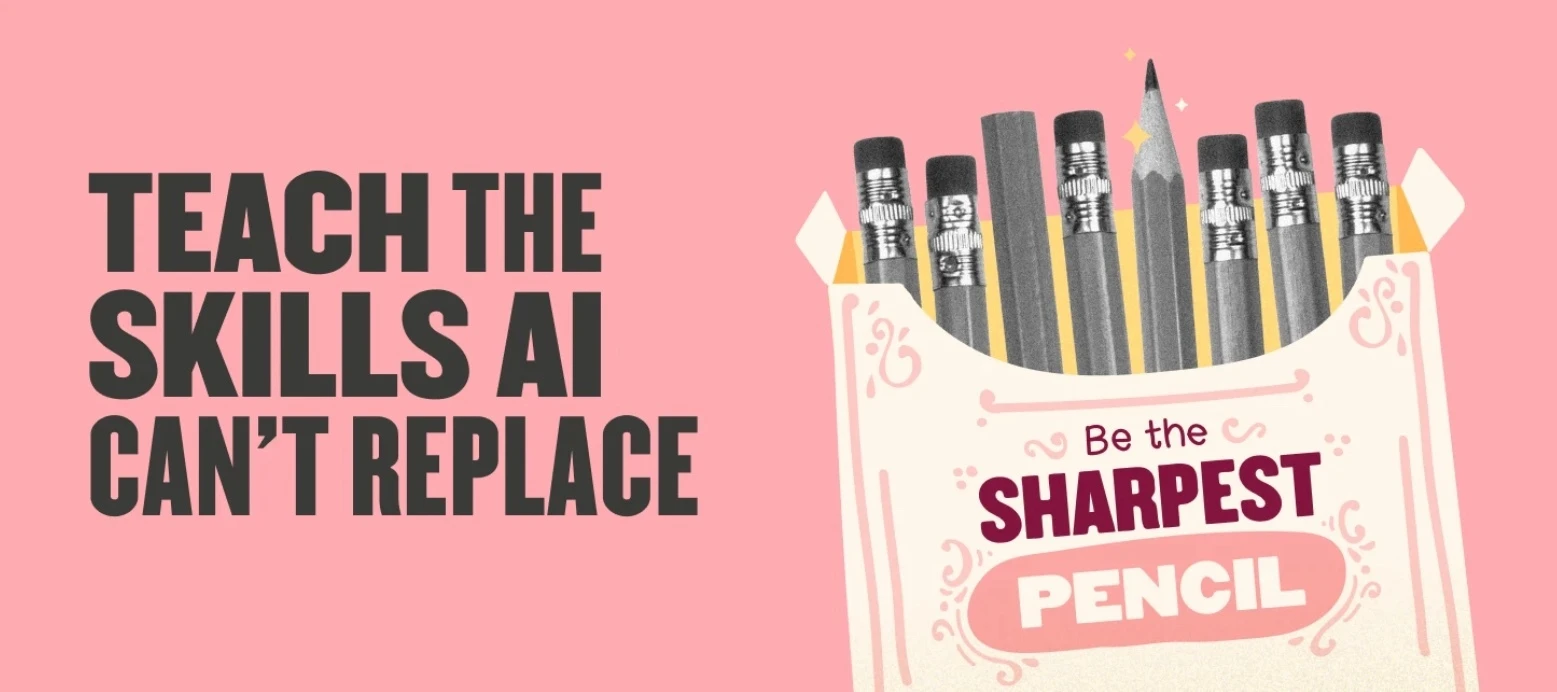


AI is here now.
It’s no longer a thing of the future, a cool sci-fi idea, or an imaginary plot point.
It’s in our inboxes, our workflows, our strategic planning docs—and it’s already changing how we work. Generative tools can create content, troubleshoot code, and automate tasks in seconds. In this new world of work, the pressure on people to prove their value is real.
In this article, we’ll explore five critical skills to prioritize and how HR can turn them into a human-first training program that drives long-term workforce resilience.
Skill 1: Critical thinking and data literacy
Fact-checking AI is a human skill no one can afford to be without.
Even the smartest tools make mistakes. They hallucinate. They misinterpret context. And they confidently present incorrect information as fact. People need to know how to assess AI outputs, ask the right questions, spot inconsistencies, and make judgment calls that drive quality.
Training ideas
- Workshop the flaws. Build scenario-based exercises using AI-generated outputs with gaps or errors. Ask teams to critique, identify the gaps, rewrite, and improve.
- Normalize questioning. Bake curiosity into your culture. When people feel empowered to challenge outputs and review assumptions, overall quality improves (AI-assisted or not).
Skill 2: Scoping and defining work clearly
When it comes to AI, input is everything.
But prompts are only as good as the person prompting. A well-defined brief sets the stage for high-quality output, whether you’re generating copy, analyzing data, or drafting project plans.
Training ideas
- Teach clarity as a core skill. Show teams how to break down objectives, define success criteria, and organize information before engaging any tool (AI or otherwise).
- Use real work to build prompt expertise. Everyday tasks like drafting job descriptions, writing code, or building dashboards are great ways to practice scoping inputs and interacting based on outputs.
- Encourage cross-functional planning. Pair teams (like sales and product or ops and marketing) to co-define project goals and outputs. This builds stronger alignment and sharper input.
- Celebrate clarity. Call out and reward great scoping when you see it. Make it a shared success metric, not just a behind-the-scenes habit.
Skill 3: Writing and editorial strength
AI generates. Humans elevate. In other words, good drafts don’t publish themselves.
Training ideas
- Make writing part of performance. Build writing and editing skills into growth plans for all roles, not just marketing or comms.
- Run editing labs. Host peer review sessions or prompt writing workshops to build confidence and fluency with generative tools. Bring in editors-in-residence to coach teams on effective refinement.
- Normalize feedback loops. Encourage open critique and collaboration. The more people practice refining each other’s (and their own) work, the better the collective output gets.
Skill 4: In-person communication and storytelling
The more saturated our written content becomes with AI-generated text, the more human presence stands out.
Training ideas
- Host storytelling bootcamps. Blend improv with presentation coaching to help people find their voice, share their work in compelling ways, and build confidence in expressing ideas live.
- Promote storytelling as a company-wide skill. Storytelling isn’t just for sales or the C-suite. Teach teams across roles to share ideas clearly and drive alignment.
- Recognize and reward strong communication. Highlight moments when people present clearly, share ideas powerfully, or help teams align through great storytelling. When others see it modeled, they’re more likely to invest in developing the skill themselves.
Skill 5: Relationship-building and emotional intelligence
Connection is the competitive edge in today’s technology-saturated world. No algorithm can truly know your people. That’s still your superpower. Empathy, feedback, and team dynamics—these are the intangible skills that make or break collaboration.
Training ideas
- Embed EQ into leadership development. Make emotional intelligence a cornerstone of manager training, onboarding, and mentoring.
- Design rituals for real connection. Promote trust and inclusion, whether remote or in-office, that encourage people to share, listen, and support each other.
- Model healthy feedback. Equip teams with tools to give and receive feedback with empathy. Great collaboration starts with trust.
Run a skills audit, pilot a new session. Ask: Where does your team need support? What programs can you pilot now to build these capabilities?
