
Video — How to leverage Job Catalog, by Ben Nicastri and Justin Siu

  • August 31, 2023
  • 11 replies
  • 1796 views

 🚨 NEW & UPDATED CONTENT as of July 2026


@Ben William Nicastri and @Justin Siu recently delivered a webinar on the Job Catalog feature in Bob. It was so good, we wanted to make sure that it could be watched by others outside of APJ (shoutout @Cristina Paun for the idea).

So, please, watch the recording below if you are interested in leveraging Job Catalog at your company:

If you have any questions or comments, leave them below. A member of the HiBob team will drop in to answer.

Thank you!

11 replies

Beth Hippisley

Do you happen to have a list of the Q&As from that call? We don’t get to see them on the recordings and I bet they’re super helpful for people (like me) who are trying to understand how and where to begin!

I just watched the video above and was hoping someone may be able to help me answer some questions/clear up some of my thoughts:

  1. Is there somewhere I can go to get more information about how to include benchmarking data in the job catalogue?
  2. How do Hierarchy lists work with existing employee fields? 
    1. For example, if an employee profile has the Department and then the Function on there and we assign a “job” to an employee, do they in any way link together? 
  3. I’m unsure on what should be used for “job name” if it’s not job titles? Is it just taking away all levels and things from a job title?
    1. for example, would the job name be “software engineer” and then the hierarchy list from there would allow me to select which department they sit in and what level they’re at? Then the job title for them would live outside of the “job” and in the main employee profile?
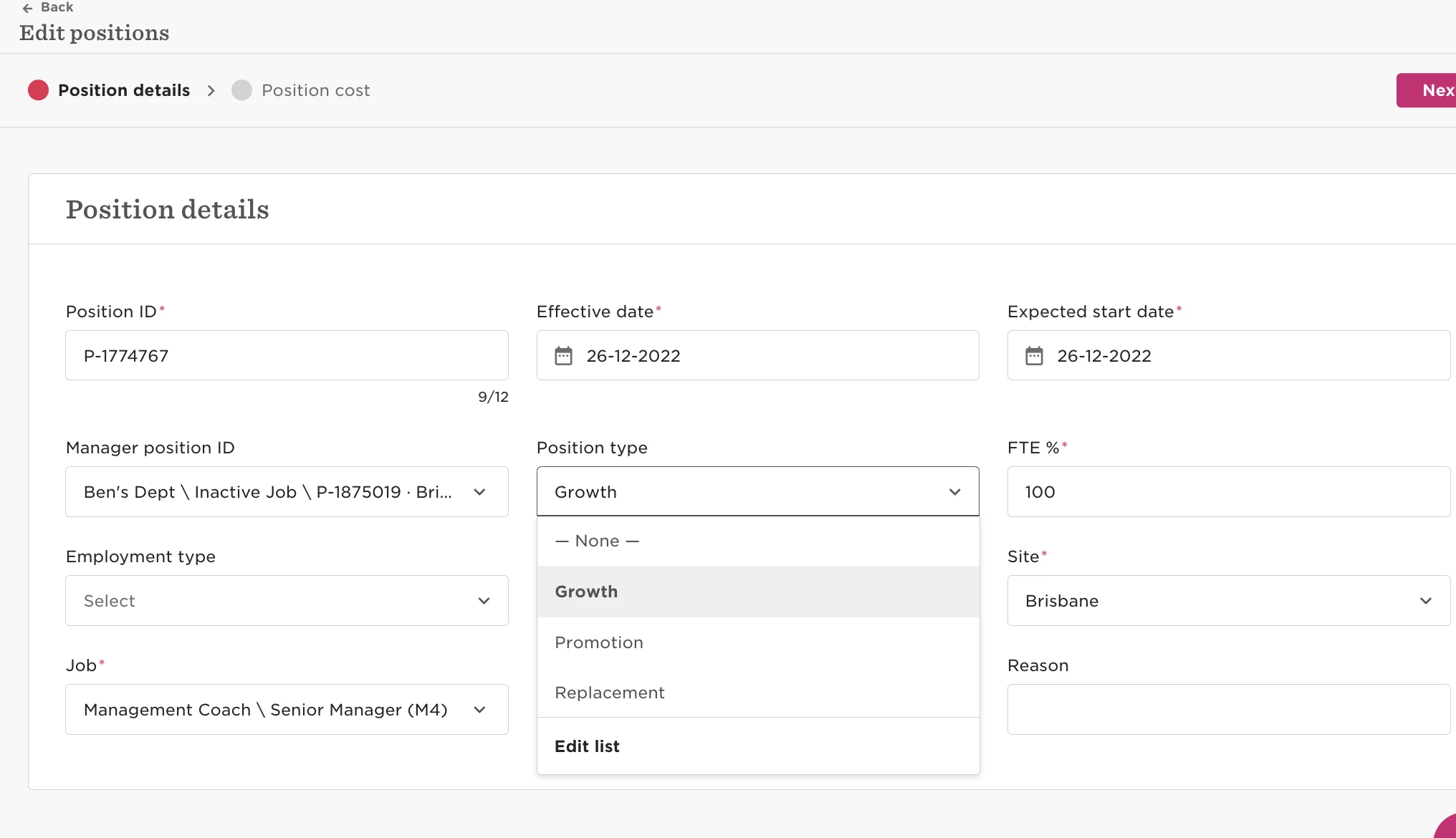
  4. Is there a useful way of using this to track whether roles are replacement roles or new roles?
    1. I was thinking of adding an attribute for this which includes a selection of “growth/backfill/promotion” or something like that. Would that work when assigning people to these jobs when setting this up from scratch?
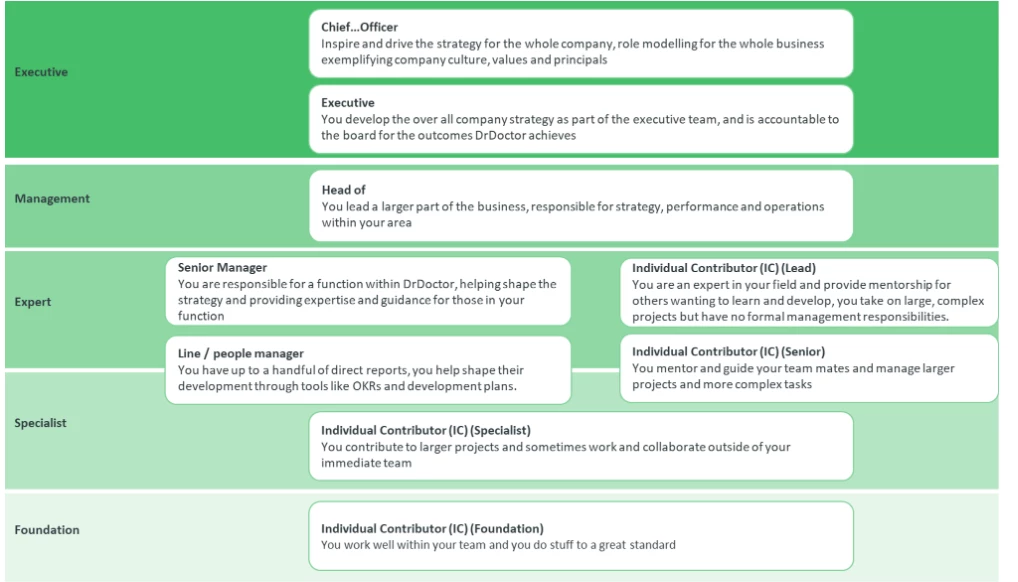
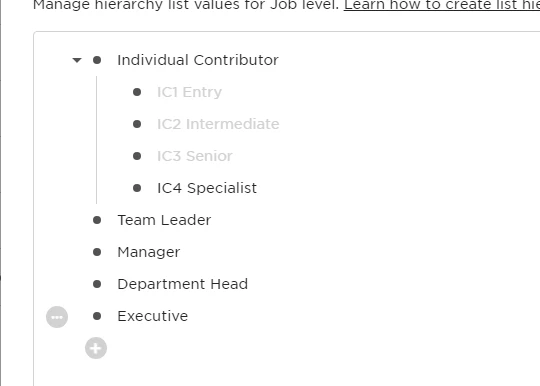
  5. I’m also trying to best understand how to set up our levels because we aren’t able to use the same names twice in there. See picture for what our levelling currently looks like. Suggestions on this would be very welcome


Lastly, I’m trying to understand how best to utilise this feature once it’s been built. Anyone got some suggestions on this?


Thanks for commenting, @Beth Hippisley.

I will loop in a couple of the team members and see if we can get the transcript shared, plus some answers to your questions. Have you seen @Richard Gale’s video on Job Catalog too?

May answer some questions — I put the transcript in the comments for that one.


Beth Hippisley

Hey Lewys, 

Looks like that video is about preparing for a compensation event? We currently don’t have that module and don’t have plans to implement it so I’m not sure it’s the right link?


  • Bobber
  • September 26, 2023

Hey Beth

Justin here from the webinar.  I’ll provide a quick writeup/notes for the Job Catalog webinar in a post following.  To answer your questions directly though:

  1. If you’re looking to hold more information in the job catalog, you can add extra custom attributes via Org>Jobs>Job attributes (with the new UI turned on otherwise its in Settings). So if you want to create new attributes to be held with the Job such as benchmarking salary survey code then you can do that.  However, the information will not be linked anywhere so if you were thinking about the next steps related to Compensation then you may need to consider other modules down the track.  However if you’re referring to the Mercer Benchmarking then that is only available for customers how have purchased that module.
  2. I assume this is a question about the Job Function hierarchy list.  The departments list does not link with the Job Function.  The reason is that whilst your department structure will inform how you pull together your Job Function tree there will be some differences.  However, as a starting point since the Job Function tree does not link anywhere and it is not a mandatory field in JC you can come back to this at a later point.
  3. Job name and job title are separate.  Two things you’ll want to do - take your job titles and remove level e.g. job titles of Senior Software Engineer, Software engineer and Junior Software Engineer would have a Job name (in JC) as Software Engineer and then would have the Senior, Intermediate and Junior as levels.  Second task would be check if there are any job titles that are essentially software engineers but called something else - you would consolidate into the Job of Software Engineer
  4. This is something that is already catered for in the Workforce Planning (WFP) module.  As Job Catalog acts as the foundational information for the WFP then I would not hold that information in the Job Catalog itself.  The job catalog should function as an index of all the jobs within your organisation without reference to things like vacancies, department, region, compensation etc.
  5. If there aren’t any “sub-levels” then you could have the level sit as a parent node since as you have experienced you cannot repeat the level names.


As outlined in the webinar, having a job catalog will be foundational to other areas of bob presently in WFP and potentially in future product/feature releases.  Regardless of bob though, having the job catalog information available will help facilitate HR conversations around recruitment, performance management, talent management, L&D, compensation reviews and the list goes on!

Hope this helps.


  • Bobber
  • September 26, 2023

Copy of the polls that were posted (as I realised they don’t turn up on the recording)

Poll

Does your company have an existing job catalog?

  • Yes - it is stored and managed on a system (bob or otherwise)
  • Yes - it is stored outside of bob and we’d like to implement in bob
  • No - but I am interested in building one in the near future
  • No - it is not a priority right now.
  • Not sure what you mean by job catalog

Are you using job level/banding for roles (e.g. Individual Contributor, Team Lead, Manager, Director, VP etc)?

  • We have all our roles mapped to an internally developed banding structure
  • We benchmark our roles with external market survey data and mimic the levels
  • Not yet
  • Other - post in chat.

Introduction

As a company grows it is quite normal that as a manager identifies a need for extra resources and hires someone, he or she will create a job and put a bunch of responsibilities and expectations that they need. Now multiply that by the amount of managers you have, the amount of times they will hire someone and the add the occasional request that the perfect candidate wants a certain title then over time you’ll end up with 20 different ways to say “Project Manager” or “Marketing coordinator.

Growing pains of a growing company with no Job Catalog

  • People doing the same job in multiple locations/teams/functions with different job titles
  • Inability to move people around
  • Difficulty creating a global skills inventory
  • Challenges with pay equity and job mobility

What is a job catalog

Job Catalog (sometimes called job structure, job architecture, or leveling) refers to the infrastructure or hierarchy of jobs within an organisation. 

Job architecture encompasses Job Family, Sub-Family, Function, Role & Level. 

It is a way of identifying and grouping Jobs together in a way that is efficient, sets out clear and consistent job requirements and clear career paths.

Having a job architecture is only really one piece of the puzzle in the world of strategic HR.  Here are some of the impacts in both Job Catalog and other connected areas.

Job Catalog

Compliance and Legal Requirements (EEO)

Transparency and consistency

Internal job title vs external job title

Compensation

Ensure compensation is internally equitable

Compensation Bands

Like for like comparison

Pay transparency

WFP

Supports organizational design

Internal mobility

Identify skill gaps

Talent Acquisition

Create job postings and defining requirements

Strategic talent acquisition

Hire for skill gaps

Competencies

Knowledge, skills, abilities and behaviors needed to effectively perform

Performance

Expectations with job responsibilities

Learning and Development

Target training programs by the skills and competencies required for advancement (career path) and company growth

Succession Planning


Tips on how to get started

  • If you are doing this activity for the first time ever, start really simple.  Develop a very simple job architecture and only create more layers of differentiation as you feel you need it and really stress test whether you need it.  Ensure that your philosophy and methodology is developed and evolved with simplicity in mind. 
    • From a practical starting point one thing you can do is grab a report of all your people with department, job titles, “is a manager”.  Start with your job titles to convert into job names by stripping all references to location and seniority.  For example someone might have a job title as per their contract of employment “Senior Account Manager - EMEA” so you would end up with a job name of Account Manager. 
    • For your job levels, start with basic classification for example IC, Team Lead, Manager, Executive and then with your knowledge of how levels can be used in say Compensation or Talent, determine how many levels are needed.  For example, do you need to distinguish between a Manager vs Senior Manager vs Department Head. 
    • Finally if your departments are divided up into functions then you can use that as your starting blocks but note that the department is separate from your Job Function tree.
  • The process and philosophy needs to come before the system
  • Review regularly, stress test theories data points. Don’t be afraid to improve or change if needed
  • Be innovative - there are no “wrong” answers; only starting points.
  • Have a system that can store the data and scale with you

General FAQ

  • How can I access bob’s Job Catalog?
    • It is part of CoreHR and you can find it under Org>Job Catalog
  • Do I need to pay for Job Catalog?
    • It is included as part of your CoreHR subscription
  • I currently don’t have WFP, should I start creating my job catalog now?
    • Never too early to start the conversation as it has an impact on all facets of HR
  • I have been benchmarking my roles against salary surveys, can I use their classifications and level?
    • Use them as a starting point to develop your own level/bands


Thanks for sharing, @Justin Siu! Hope that helped, @Beth Hippisley 😊.


Hi @Justin Siu 

Have just watched which was really helpful.

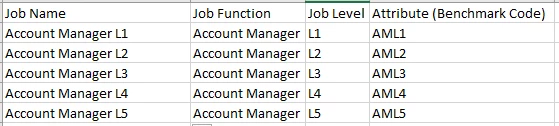
I had a question on a custom attribute for salary benchmarking data, when there is a code I’d assume I will need to split out the jobs.

eg if I had account manager as the function and 5 levels, I’d have one attribute code associate to all these. Which wouldn't be correct. 

I’d need to separate the out to using the right survey code in the attribute as they wouldn't be unique grouped under the generic job name of Account Manager.

Have put an example below


Netta Brodsky
Bobber

Hi @Aaron Mudd ,

I am Netta, a new team member of the "Community" team.

Thank you for your question! Indeed, as you mentioned, the correct way is to create a custom attribute and specify each benchmark code in a separate row.


Thanks @Netta Brodsky 


Hi,

When I click on the link to watch the video, it pops up with an error from Vimeo. Do you have a Zoom link instead? I have seen that in some of the other posts at Heartcore there is also a Zoom link, as others also experience these errors with Vimeo. Thank you! 


Kat Larsen
Bobber
  • Bobber
  • July 4, 2024

Hejsa @Maiken Klitgaard Sanderhoff, thanks for getting in touch! The vimeo issue is resolved by clearing cashe + cookies and reaccepting HCHR’s terms, but you’re also able to view the recording here, if that’s easier.

Will start linking these in the posts moving forward. Thanks so much and let me know if you still have issues viewing.  Ha’ en skøn dag 🌞